Introduction
A slippery bathroom floor can be more than just annoying—it’s a serious safety risk for everyone in your home. Learning how to clean slippery bathroom floors safely is essential to prevent accidents while keeping your bathroom clean and hygienic. Soap scum, hard water deposits, and mold buildup are common culprits, but with the right tools, safe cleaning solutions, and proper techniques, you can restore traction and maintain a slip-free surface. This guide will show you simple, effective methods to clean your bathroom floors safely and prevent them from becoming slippery again.
Table of Contents
Why Bathroom Floors Become Slippery
Understanding why bathroom floors become slippery is the first step in learning how to clean slippery bathroom floors safely and prevent accidents. Bathrooms are exposed to constant moisture, product residue, and humidity, all of which contribute to slick surfaces over time.
Soap and Shampoo Residue Buildup
One of the most common reasons bathroom floors become slippery is leftover soap, shampoo, and body wash residue. These products contain oils and conditioning agents that leave behind a thin, invisible film. When this film mixes with water, the floor becomes extremely slick, increasing the risk of slips and falls. Proper cleaning methods are essential when learning how to clean slippery bathroom floors safely
Hard Water Mineral Deposits
In many homes, hard water leaves mineral deposits such as calcium and lime on bathroom floors. These deposits may not always be visible, but they create a smooth layer that reduces traction. When water hits these minerals, the surface becomes even more slippery. Removing mineral buildup is an important part of how to clean slippery bathroom floors safely
Mold, Mildew, and Biofilm Growth
Warm and humid bathroom environments encourage mold, mildew, and bacterial biofilm to grow, especially in grout lines and corners. Biofilm forms a slimy layer that can make floors dangerously slick. Regular and safe cleaning helps eliminate these growths and plays a key role in how to clean slippery bathroom floors safely
Using the Wrong Cleaning Products
Some floor cleaners leave behind waxy or greasy residues designed to add shine. While these products may look appealing, they often make bathroom floors more slippery. Overusing soap-based cleaners can worsen the problem instead of solving it. Choosing the right product is critical when learning how to clean slippery bathroom floors safely
Poor Ventilation and Excess Moisture
Bathrooms with poor airflow trap moisture on the floor for longer periods. When water doesn’t evaporate quickly, it increases the chances of residue buildup and microbial growth. Improving ventilation helps keep floors dry and reduces slipperiness, supporting long-term results when practising how to clean slippery bathroom floors safely.
Safety Precautions Before Cleaning Slippery Bathroom Floors
Before starting the process of how to clean slippery bathroom floors safely, it’s important to take a few basic safety precautions. These steps help reduce the risk of slips, falls, and exposure to cleaning products while ensuring the cleaning process is effective and controlled.
Wear Non-Slip Footwear
Always wear rubber-soled or non-slip shoes while cleaning the bathroom floor. Bare feet or socks can easily slide on wet or soapy surfaces. Proper footwear provides better grip and stability, especially when learning how to clean slippery bathroom floors safely
Improve Ventilation
Good airflow helps reduce excess moisture and fumes from cleaning products. Open a window or turn on the exhaust fan before you begin cleaning. Proper ventilation also helps floors dry faster, which is an essential part of how to clean slippery bathroom floors safely
Keep Children and Pets Away
Wet bathroom floors are extremely hazardous for children and pets. Make sure the bathroom is off-limits while cleaning and until the floor is completely dry. This precaution is often overlooked but is crucial when following safe methods for how to clean slippery bathroom floors safely
Use Protective Gloves
Wearing cleaning gloves protects your skin from irritation and gives you a better grip on cleaning tools. Gloves also help maintain hygiene, especially when removing mold, mildew, or residue buildup during the process of how to clean slippery bathroom floors safely
Avoid Over-Wetting the Floor
Using too much water increases the risk of slipping and slows down drying time. Always wring out mops and cloths well before use. Controlled moisture is a key principle in how to clean slippery bathroom floors safely and prevent accidents
Best Tools and Supplies for Cleaning Slippery Bathroom Floors
Using the right tools and supplies is essential when learning how to clean slippery bathroom floors safely. The correct equipment not only makes cleaning easier but also helps prevent residue buildup that can make floors slick again.
Microfiber Mop or Cloth
A microfiber mop or cloth is one of the safest tools for bathroom floors. It effectively lifts dirt, soap residue, and moisture without leaving streaks or slippery films behind. Unlike traditional cotton mops, microfiber absorbs water quickly, which supports safe drying—an important part of how to clean slippery bathroom floors safely
Soft-Bristle Scrub Brush
A soft-bristle brush helps remove stubborn soap scum, mineral deposits, and biofilm without scratching the floor surface. This is especially useful for textured tiles and grout lines where slipperiness often starts. Gentle scrubbing plays a key role in how to clean slippery bathroom floors safely without causing damage
Bucket with Warm Water
Warm water helps break down grease, soap residue, and grime more effectively than cold water. Always use a clean bucket to avoid spreading old residue back onto the floor. Proper water control is critical when practicing how to clean slippery bathroom floors safely
pH-Neutral or Non-Slip Floor Cleaner
Choose a pH-neutral cleaner specifically designed for bathroom or tile floors. These cleaners remove buildup without leaving waxy or oily residues that can cause slipping. Selecting the right product is a major factor in how to clean slippery bathroom floors safely and maintain long-term traction
Natural Cleaning Ingredients
Natural ingredients like white vinegar and baking soda can be effective for removing soap scum and mineral deposits when used correctly. These options are helpful for people who prefer chemical-free solutions while still focusing on how to clean slippery bathroom floors safely
How to Clean Slippery Bathroom Floors Safely (Step-by-Step Guide
This step-by-step guide explains how to clean slippery bathroom floors safely without damaging the surface or leaving behind residue that causes slipping. Follow each step carefully for the best and safest results.
Step 1: Remove Loose Dirt, Hair, and Debris
Start by sweeping or vacuuming the bathroom floor to remove dust, hair, and loose debris. This prevents dirt from spreading during mopping and helps cleaning solutions work more effectively. A clean surface is the foundation of how to clean slippery bathroom floors safely
Step 2: Prepare a Safe Cleaning Solution
Choose a pH-neutral bathroom floor cleaner or mix a natural solution using warm water and a small amount of vinegar. Avoid strong soaps or wax-based products, as they can leave slippery residue. Using the right solution is essential when learning how to clean slippery bathroom floors safely
Step 3: Mop the Floor Carefully
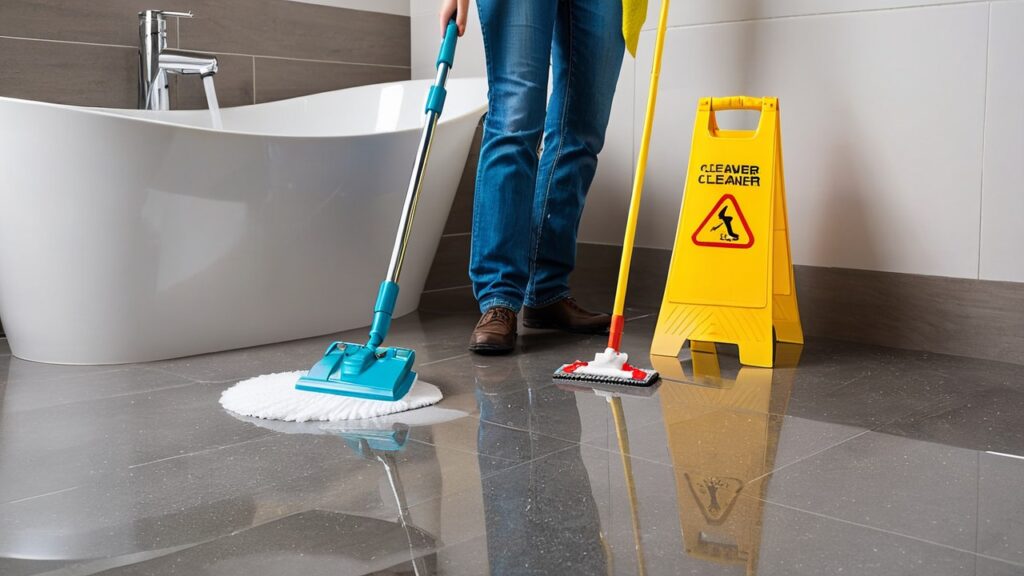
Dip the microfiber mop into the solution and wring it out thoroughly. The mop should be damp, not dripping wet. Clean the floor in slow, controlled motions to reduce the risk of slipping and ensure even coverage. Controlled moisture is a key principle of how to clean slippery bathroom floors safely
Step 4: Scrub Slippery or High-Traffic Areas
Pay extra attention to areas near the shower, bathtub, toilet, and sink. Use a soft-bristle brush to gently scrub soap buildup, mineral deposits, or biofilm. Removing these layers improves traction and supports long-term results when practicing how to clean slippery bathroom floors safely
Step 5: Rinse to Remove Residue
Rinse the floor using clean warm water to remove any leftover cleaner. Skipping this step can leave behind a film that makes floors slippery again. Proper rinsing is often overlooked but is critical in how to clean slippery bathroom floors safely
Step 6: Dry the Floor Completely
Use a dry microfiber cloth or towel to remove excess moisture. Make sure the floor is fully dry before allowing foot traffic. Drying the floor thoroughly is one of the most important steps in how to clean slippery bathroom floors safely
How to Clean Slippery Bathroom Floors Naturally
If you prefer chemical-free options, natural methods can be very effective for learning how to clean slippery bathroom floors safely. When used correctly, natural ingredients remove residue and buildup without leaving behind slippery films.
Vinegar and Warm Water Solution
White vinegar helps break down soap scum and hard water deposits that make bathroom floors slippery. Add equal quantities of warm water and white vinegar to a bucket and mix well.. Mop the floor using a well-wrung microfiber mop, then rinse with clean water to remove any remaining vinegar residue. This method supports how to clean slippery bathroom floors safely without harsh chemicals
Baking Soda for Stubborn Slippery Spots
For areas with heavy buildup, sprinkle a small amount of baking soda directly onto the slippery section. Add a little warm water to form a gentle paste and scrub lightly with a soft-bristle brush. Baking soda provides mild abrasion without scratching surfaces, making it useful for how to clean slippery bathroom floors safely
Rinse Thoroughly After Natural Cleaning
Even natural cleaners can leave residue if not rinsed properly. Always rinse the floor with clean water and dry it completely. This step ensures the floor does not remain slick after cleaning and is a critical part of how to clean slippery bathroom floors safely
Safety Tips When Using Natural Cleaners
- Do not use vinegar on natural stone surfaces such as marble or limestone, as it can damage the stone.
- Do not mix vinegar with other cleaners
- Test natural cleaning solutions on a small, out-of-sight spot before full use.
Following these precautions helps ensure that natural methods remain safe and effective when practicing how to clean slippery bathroom floors safely.
How to Clean Slippery Bathroom Floors by Material Type
Different bathroom floor materials require different cleaning approaches. Using the correct method for each surface is essential when learning how to clean slippery bathroom floors safely without causing damage or increasing slipperiness.
Ceramic and Porcelain Tile Floors
Ceramic and porcelain tiles are common in bathrooms and can become slippery due to soap residue and hard water buildup. Use a pH-neutral cleaner or a vinegar and water solution, and scrub grout lines with a soft-bristle brush.Make sure all cleaner is washed away, then dry the surface to stop residue buildup.. Proper care of tile floors is a key part of how to clean slippery bathroom floors safely
Vinyl Bathroom Floors
Vinyl flooring is sensitive to harsh chemicals and abrasive tools. Clean using warm water and a mild, non-slip floor cleaner. Avoid excessive water, as moisture can seep into seams and cause damage. Gentle cleaning helps maintain traction and supports how to clean slippery bathroom floors safely
Marble and Natural Stone Floors
Natural stone floors require extra care. Avoid vinegar or acidic cleaners, as they can damage the surface and make it smoother over time. Use a stone-safe, pH-neutral cleaner and a soft cloth or mop. Rinse lightly and dry immediately to preserve grip and follow best practices for how to clean slippery bathroom floors safely
Textured or Anti-Slip Tiles
Textured tiles are designed to improve traction but can trap soap scum and dirt. Use a soft-bristle brush to clean grooves and patterns thoroughly. Regular deep cleaning keeps these tiles effective and aligns with how to clean slippery bathroom floors safely.
Mistakes to Avoid When Cleaning Slippery Bathroom Floors
Even with good intentions, certain cleaning habits can make the problem worse. Avoiding these common mistakes is essential if you want to truly understand how to clean slippery bathroom floors safely and keep them from becoming hazardous again.
Using Too Much Cleaner
More cleaner does not mean better results. Excess soap or liquid cleaner often leaves behind a slippery film that attracts dirt and moisture. Always follow product instructions and use only a small amount. Proper dosage is a key rule in how to clean slippery bathroom floors safely
Skipping the Rinse Step
Many people mop and stop there. Skipping rinsing allows residue to dry on the surface, making floors slick again within days. Rinsing with clean water removes leftover cleaner and is critical in how to clean slippery bathroom floors safely
Using Waxy or Oil-Based Products
Products designed to add shine often contain wax or oils that reduce traction. While the floor may look clean, it becomes more dangerous to walk on. Avoid polish-style cleaners when learning how to clean slippery bathroom floors safely
Over-Wetting the Floor
Using too much water increases slip risk and slows drying time. It can also allow moisture to seep into grout or flooring seams. A damp mop—not a dripping one—is best practice for how to clean slippery bathroom floors safely
Ignoring Grout and Corners
Slipperiness often starts in grout lines, corners, and edges where mold and residue build up. Cleaning only the open floor surface leaves these problem areas untreated. Deep cleaning hidden spots supports long-term success in how to clean slippery bathroom floors safely
How to Prevent Bathroom Floors from Becoming Slippery Again
Prevention is just as important as cleaning when it comes to maintaining safety. By following these tips, you can reduce buildup and maintain traction after learning how to clean slippery bathroom floors safely.
Clean Bathroom Floors Regularly
A consistent cleaning schedule prevents soap scum, hard water minerals, and biofilm from building up. Light cleaning once or twice a week keeps surfaces from becoming slick and reduces the need for deep scrubbing. Regular maintenance supports long-term results when practicing how to clean slippery bathroom floors safely
Rinse Floors After Showers
After showering, quickly rinsing the floor with clean water helps remove leftover soap and shampoo. This simple habit reduces residue buildup and makes future cleaning easier. Small habits like this improve results from how to clean slippery bathroom floors safely
Improve Bathroom Ventilation
Proper ventilation helps moisture evaporate faster, reducing mold and residue formation. Maintain airflow by using the exhaust fan or opening a window during and after showers.. Dry floors are safer floors, reinforcing best practices for how to clean slippery bathroom floors safely
Use Non-Slip Bath Mats
Place non-slip mats near showers, tubs, and sinks to absorb water and improve traction. Make sure mats have rubber backing and are cleaned regularly to avoid mold buildup. Mats complement your efforts in how to clean slippery bathroom floors safely
Avoid Residue-Forming Products
Choose cleaners labeled as non-slip or residue-free. Avoid floor polishes and wax-based products that reduce traction. Smart product choices help maintain the results of how to clean slippery bathroom floors safely
FAQ
Why is my bathroom floor still slippery after cleaning?
Bathroom floors often remain slippery because cleaner residue, soap buildup, or hard water minerals were not fully removed. Skipping the rinse step or using too much cleaner can leave a slick film behind. Proper rinsing and drying are essential parts of how to clean slippery bathroom floors safely
Is vinegar safe for cleaning slippery bathroom floors?
Vinegar is safe for ceramic, porcelain, and vinyl floors when diluted with water. However, it should not be used on marble or natural stone, as it can damage the surface and reduce traction. Knowing when to use vinegar helps ensure how to clean slippery bathroom floors safely
What is the safest cleaner for slippery bathroom floors?
The safest option is a pH-neutral, non-slip floor cleaner designed for bathroom use. These cleaners remove residue without leaving behind slippery films. Choosing the right product is a major factor in how to clean slippery bathroom floors safely
How often should bathroom floors be cleaned?
Light cleaning once or twice a week is usually enough to prevent slipperiness. High-traffic or shared bathrooms may need more frequent cleaning. Regular maintenance improves results from how to clean slippery bathroom floors safely
Can slippery bathroom floors be dangerous?
Yes, slippery bathroom floors increase the risk of slips and falls, especially for children and older adults. Regular cleaning and preventive measures significantly reduce these risks and reinforce the importance of how to clean slippery bathroom floors safely.
Conclusion
Slippery bathroom floors are a common safety hazard, but understanding how to clean slippery bathroom floors safely can prevent accidents and maintain a hygienic environment. Soap residue, hard water deposits, mold, and improper cleaning products often make floors slick, but using the right tools, pH-neutral or natural cleaners, and proper techniques—such as mopping carefully, rinsing thoroughly, and drying completely—can restore traction and prevent buildup. Regular maintenance, improved ventilation, and non-slip mats further reduce the risk of slips, ensuring your bathroom stays clean, safe, and comfortable for everyone.