Introduction
A clean bathroom looks good, but a truly healthy bathroom is one that is disinfected. Simply scrubbing surfaces or wiping away visible dirt is not enough to eliminate harmful bacteria, viruses, and mold that thrive in warm, damp areas. Learning how to disinfect a bathroom properly is essential for protecting your family’s health and maintaining a hygienic home environment.
In this guide, we will show you the step-by-step process to disinfect every part of your bathroom, including toilets, sinks, showers, floors, and high-touch areas. You’ll also discover natural cleaning alternatives, tips to prevent germs from returning, and common mistakes to avoid. By the end, you’ll have all the knowledge you need to keep your bathroom safe, fresh, and germ-free.
Table of Contents
What Does It Mean to Disinfect a Bathroom?
To disinfect a bathroom means to kill harmful germs, bacteria, and viruses that live on bathroom surfaces. Bathrooms are one of the most germ-filled areas in any home because they are constantly exposed to moisture, body fluids, and warm temperatures. These conditions allow bacteria and mold to grow quickly if surfaces are not properly disinfected.
Many people think wiping surfaces with soap or a general cleaner is enough, but that only removes visible dirt. Disinfecting goes a step further. When you disinfect a bathroom, you use a product designed to destroy invisible germs on toilets, sinks, shower walls, floors, and other high-touch areas. This process helps prevent the spread of illnesses and keeps your bathroom hygienic and safe.
There is also a difference between cleaning, sanitizing, and disinfecting. Cleaning removes grime and soap scum. Sanitizing lowers the number of germs. Disinfecting kills most of the germs completely. That is why it is important to disinfect a bathroom, not just clean it, especially in households with children, elderly people, or anyone with a weak immune system.
High-touch surfaces like toilet handles, flush buttons, faucet knobs, light switches, and door handles carry the most germs. When these areas are not disinfected regularly, bacteria can easily spread from one person to another. Proper bathroom disinfection stops this cycle and keeps the space healthier for everyone.
Why You Should Disinfect Your Bathroom Regularly
To disinfect a bathroom regularly is one of the easiest ways to protect your health. Bathrooms are used multiple times every day, which means germs are constantly being introduced and spread. Without regular disinfection, bacteria, viruses, and mold can quickly build up on surfaces and in damp areas.
One of the biggest reasons to disinfect a bathroom often is to stop the spread of illness. Germs from hands, toilets, and sinks can transfer to faucets, door handles, and countertops. When these surfaces are not disinfected, they become a source of cross-contamination that can make people sick.
Regular bathroom disinfection also helps control mold and mildew. Warm and humid conditions allow mold to grow on tiles, grout, shower curtains, and ceilings. Disinfecting these areas prevents stains, bad odors, and potential breathing problems caused by mold spores.
Another benefit of keeping a disinfected bathroom is improved hygiene and comfort. A fresh, clean-smelling bathroom feels better to use and looks more inviting. When you disinfect a bathroom on a regular schedule, it also becomes easier to maintain because dirt and bacteria do not get the chance to build up.
Finally, disinfecting your bathroom protects your family, especially children and elderly people who are more sensitive to germs. A properly disinfected bathroom creates a healthier home and reduces the risk of infections.
What You Need to Disinfect a Bathroom
Before you start to disinfect a bathroom, it is important to have the right tools and products ready. Using proper equipment makes the job easier, faster, and more effective. It also helps ensure that germs are removed instead of being spread around.
Cleaning Tools
Basic cleaning tools help remove dirt and allow disinfectants to work properly.
You will need:
- Rubber gloves to protect your hands
- A scrub brush for tiles, grout, and toilet bowls
- A microfiber cloth for wiping surfaces
- A sponge for sinks and tubs
- A spray bottle for liquid disinfectants
These tools help you reach all areas of the bathroom and clean them thoroughly before and after disinfecting.
Disinfecting Products
To properly disinfect a bathroom, you need products that can kill bacteria and viruses. These are the most commonly used and effective options:
- Bleach – A powerful disinfectant that kills nearly all germs
- White vinegar – Useful for natural disinfection and odor removal
- Hydrogen peroxide – Kills bacteria and helps remove stains
- Commercial bathroom disinfectant – Designed specifically for bathroom surfaces
- Baking soda – Helps clean and deodorize while supporting disinfecting products
Using the right disinfecting products ensures that surfaces are not just clean, but also free from harmful germs.
How to Disinfect a Bathroom (Step-by-Step)
To properly disinfect a bathroom, you need to follow a clear and organized process. This ensures that dirt, bacteria, and viruses are removed instead of being spread from one surface to another.
Remove Surface Dirt
Start by removing visible dirt and dust. Sweep or vacuum the bathroom floor and wipe away hair, dust, and soap residue from sinks, counters, and shelves. A clean surface lets the disinfecting solution do its job properly. If grime is left behind, it can block the disinfectant from reaching the germs.
Apply the Disinfectant
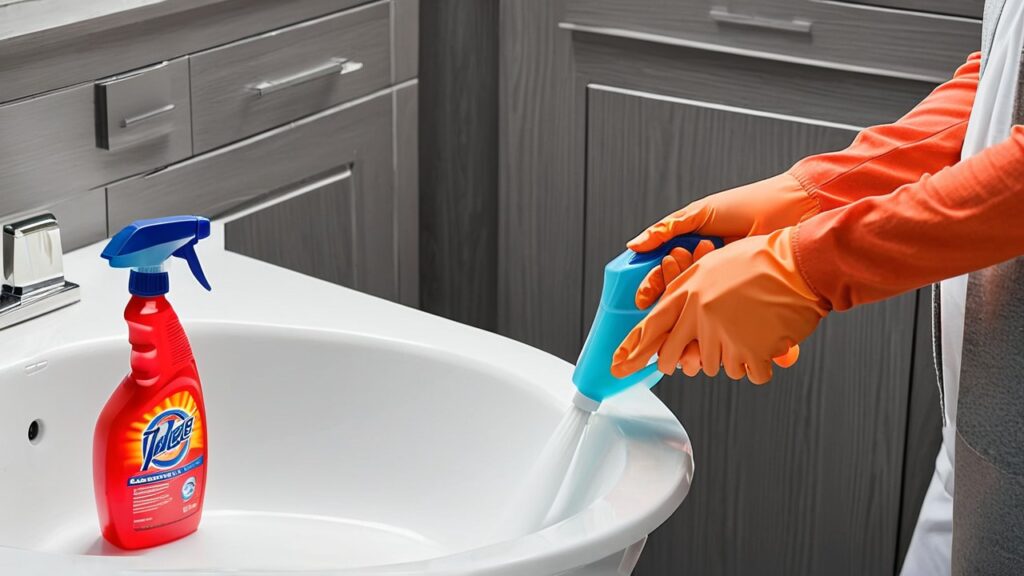
Spray or apply your disinfecting product to all major surfaces. This includes the toilet, sink, faucet handles, shower walls, bathtub, and bathroom floor. Make sure the surfaces stay wet for the amount of time listed on the product label. This waiting time allows the disinfectant to kill bacteria and viruses effectively.
Scrub and Clean
Use a scrub brush or sponge to clean the toilet bowl, sink, and shower areas. Pay extra attention to corners, grout lines, and areas where moisture builds up. This scrubbing helps remove stubborn buildup while the disinfectant does its job.
Rinse and Dry
Clean water should be used to remove residue from sinks, tiles, and tubs. Wipe everything dry with a clean microfiber cloth. Drying helps prevent water spots and stops mold and bacteria from growing again.
Following these steps each time you disinfect a bathroom will keep it fresh, safe, and hygienic.
How to Disinfect Bathroom Surface
To fully disinfect a bathroom, you must focus on every surface that comes into contact with water, hands, and germs. Some areas collect more bacteria than others, so giving them extra attention keeps your bathroom truly hygienic.
Toilet and Toilet Seat
The toilet is the most germ-filled area in the bathroom. Apply disinfectant to the toilet bowl, seat, lid, and flush handle.Give the product a short time to work before cleaning it off. This kills bacteria that can cause illness and bad odors.
Sink and Faucets
Sinks and faucet handles are touched many times each day. Spray disinfectant on the sink basin, handles, and surrounding counter. Wipe them thoroughly to remove toothpaste, soap, and hidden germs.
Shower Walls and Bathtub
Soap scum and moisture allow bacteria and mold to grow. Use a disinfecting cleaner on tiles, shower walls, and the bathtub. Scrub gently to remove buildup and rinse well.
Bathroom Floor
The bathroom floor collects water, hair, and dirt, which can carry germs. Mop the floor with a disinfectant solution, paying special attention to corners and areas around the toilet.
High-Touch Areas
Don’t forget door handles, light switches, towel racks, and cabinet knobs. These are often overlooked but carry a lot of bacteria. Wipe them with a disinfecting cloth or spray.
Cleaning all these areas helps ensure you truly disinfect a bathroom instead of just making it look clean.
Natural Ways to Disinfect a Bathroom
If you prefer eco-friendly or chemical-free methods, there are several ways to disinfect a bathroom naturally. These options are safe, effective, and often inexpensive.
Vinegar and Baking Soda
White vinegar is a natural disinfectant that kills many bacteria and removes odors. Combine vinegar with baking soda to scrub sinks, tubs, and tiles. This mixture also helps remove soap scum and grime without harsh chemicals.
Lemon
Lemon juice contains natural acids that can kill germs and dissolve mineral deposits. Rub lemon on faucets, sinks, or shower tiles to clean and disinfect simultaneously. It also leaves a fresh, clean scent.
Hydrogen Peroxide
Hydrogen peroxide is a safe disinfectant for many bathroom surfaces. Spray it on toilets, sinks, and counters, let it sit for a few minutes, then wipe clean. It also helps whiten grout and remove stains.
Steam Cleaning
High-temperature steam kills bacteria, mold, and mildew without any chemicals. Steam cleaners are especially effective on tiles, grout, and hard-to-reach areas like corners and behind toilets.
Using these natural methods regularly can help you maintain a healthy bathroom while avoiding strong chemical cleaners.
How Often Should You Disinfect Your Bathroom?
Knowing how often to disinfect a bathroom helps maintain hygiene without overdoing it. The frequency depends on how often the bathroom is used, who uses it, and whether anyone in the household is sick.
Daily
High-touch areas like faucet handles, toilet flush buttons, and door handles can be wiped daily with a disinfecting cloth or spray. This helps reduce germs that spread from frequent use.
Weekly
A full bathroom disinfection — including the toilet, sink, shower, bathtub, floor, and high-touch surfaces — should be done at least once a week. Regular weekly cleaning keeps germs, mold, and bacteria under control.
Monthly Deep Disinfection
Once a month, do a deeper disinfecting routine. Move items like rugs, trash cans, and bathroom accessories to clean behind and under them. Pay special attention to grout, vents, and areas that usually collect dust or moisture.
By following this schedule, you can maintain a clean, safe, and healthy bathroom for your entire family without wasting time or using excessive cleaning products.
Common Mistakes to Avoid When You Disinfect a Bathroom
Even when you clean regularly, certain mistakes can prevent your efforts to disinfect a bathroom from being effective. Avoiding these errors ensures your bathroom stays truly germ-free.
1. Not Letting the Disinfectant Sit
Disinfectants need time to work. Spraying and immediately wiping off won’t kill most bacteria and viruses. Always follow the instructions on the product label for proper contact time.
2. Mixing Chemicals
Keep bleach separate from all other cleaning solutions. Mixing chemicals can produce dangerous fumes that are harmful to your health.
3. Skipping Hidden Areas
Germs hide in overlooked spots like behind the toilet, under the sink, vents, and shower corners. Make sure to reach these areas during your disinfecting routine
4. Using Dirty Cloths or Sponges
Wiping surfaces with dirty cloths or sponges can spread bacteria instead of removing them. Always use clean microfiber cloths or disposable wipes when disinfecting.
5. Overlooking High-Touch Surfaces
Door handles, light switches, and faucet handles are touched frequently but often ignored. Disinfect these areas regularly to prevent cross-contamination.
Avoiding these common mistakes ensures your bathroom is not only clean but also safe and healthy for your family.
Tips to Keep Your Bathroom Germ-Free Longer
Disinfecting a bathroom regularly is essential, but there are simple habits you can adopt to keep your bathroom germ-free longer. These tips reduce the frequency of deep cleaning while maintaining a hygienic space.
Daily Wipe-Downs
A quick daily wipe of high-touch surfaces like faucets, toilet handles, and counters prevents germs from building up. Even just a 1–2 minute routine can make a big difference.
Proper Ventilation
Moisture encourages mold and bacteria growth. Use an exhaust fan, open windows, or a dehumidifier to keep your bathroom dry and reduce germ growth.
Close the Toilet Lid
Always close the toilet lid before flushing. This prevents germs from spreading through tiny water droplets, keeping surrounding surfaces cleaner.
Dry Wet Surfaces
Wipe down wet surfaces like sinks, counters, and shower walls after use. Drying surfaces helps prevent mold, mildew, and bacteria growth.
Keep Cleaning Supplies Handy
Store disinfecting wipes, sprays, and microfiber cloths in the bathroom. Having tools within reach makes it easier to do quick clean-ups regularly.
By incorporating these simple tips into your daily and weekly routine, you can significantly reduce the number of germs in your bathroom and make regular disinfecting easier.
FAQs
What is the best way to disinfect a bathroom?
The best way is a combination of thorough cleaning followed by a disinfectant. Start by removing dirt, dust, and grime, then apply a disinfectant (like bleach, hydrogen peroxide, or a commercial bathroom cleaner) on all surfaces. Let it sit for the recommended time, scrub if necessary, and then rinse or wipe dry.
Can vinegar disinfect a bathroom?
Yes, white vinegar has natural antibacterial properties and can disinfect many bathroom surfaces. It works well for sinks, tiles, and counters. However, it is not as strong as bleach or commercial disinfectants against viruses and some bacteria, so for deep disinfection, stronger products may be necessary.
Is bleach safe for bathroom disinfecting?
Bleach is very effective at killing germs, mold, and mildew, making it ideal for bathroom disinfecting. However, it should always be used in a well-ventilated area, never mixed with other cleaners, and handled with gloves to protect your skin.
How long does it take to disinfect a bathroom?
A full bathroom disinfection usually takes 20–45 minutes, depending on the size of the space and how dirty it is. This includes cleaning, applying disinfectant, waiting for the disinfectant to work, scrubbing, rinsing, and drying.
Conclusion
Regularly taking the time to disinfect a bathroom is one of the most effective ways to keep your home healthy, clean, and comfortable. Disinfecting goes beyond simply removing dirt—it kills germs, bacteria, and viruses that can cause illness and unpleasant odors.
By following a consistent routine, using the right tools and disinfecting products, and paying attention to high-touch surfaces, you can maintain a bathroom that is both safe and inviting. Incorporating natural methods like vinegar, lemon, or hydrogen peroxide is also a great option for those who prefer eco-friendly cleaning.
Remember, the key to a germ-free bathroom is consistency. Quick daily wipes, weekly disinfecting, and occasional deep cleaning make the process manageable and ensure that your bathroom stays fresh and hygienic. A clean, disinfected bathroom not only protects your family but also makes your home more pleasant for everyone.
Take these steps seriously, and your bathroom will remain a safe, healthy space with minimal effort.