
Introduction
A spotless sink can transform the entire look of your bathroom, and this bathroom sink cleaning guide will show you exactly how to achieve it. From removing tough stains to preventing buildup and keeping your sink shining daily, this guide covers simple, effective cleaning methods that anyone can follow. Whether your sink is porcelain, ceramic, or stainless steel, you’ll learn the best techniques and tools to maintain a fresh, germ-free bathroom effortlessly.
Table of Contents
Why a Clean Bathroom Sink Matters
Your bathroom sink is one of the most frequently used spots in your home, which means it can quickly collect soap scum, toothpaste residue, water stains, and bacteria. Keeping it clean isn’t just about appearances — it’s about maintaining hygiene, preventing odours, and protecting your sink’s surface from damage. In this bathroom sink cleaning guide, understanding why cleanliness matters helps you stay motivated to maintain it regularly.
1. It improves hygiene and prevents germs.
Every time you wash your hands, brush your teeth, or shave, tiny particles of dirt, bacteria, and soap splash onto the sink surface. If left uncleaned, these germs multiply, creating an unhealthy environment. A clean sink helps stop the spread of harmful bacteria and keeps your bathroom more sanitary for everyone.
2. It keeps your bathroom smelling fresh.
A dirty sink can quickly cause unpleasant odours. Toothpaste buildup, soap residue, and clogged drains can trap bacteria, leading to that musty bathroom smell. Regular cleaning removes these odour sources, ensuring your bathroom always smells clean and fresh.
3. Protects Sink Materials from Damage
Hard water stains, soap scum, and mineral deposits can dull your sink’s surface over time. Porcelain, stainless steel, and ceramic sinks all require proper care to maintain their shine. Regular cleaning prevents corrosion, scratching, and discolouration — extending the life of your sink.
4. Enhances the Look of Your Bathroom
A clean bathroom sink guide instantly makes your entire bathroom feel more inviting. It’s often the first thing guests notice, and a sparkling sink reflects your attention to cleanliness and detail. Plus, it boosts your mood — walking into a tidy bathroom each morning just feels better.
5. Encourages a Consistent Cleaning Habit
Understanding the benefits of a clean sink helps you stay consistent with your cleaning routine. When you see how much fresher your bathroom feels, it becomes easier to make cleaning a daily or weekly habit. As we continue through this bathroom sink cleaning guide, you’ll learn simple steps to keep your sink spotless without spending hours scrubbing.
Key Takeaway
A clean bathroom sink is essential for hygiene, odour control, appearance, and durability. It’s a small task that makes a big difference in the comfort and cleanliness of your home. By following this bathroom sink cleaning guide, you’ll maintain a space that looks excellent and feels even better.
Essential Cleaning Supplies You’ll Need
Before you start scrubbing, it’s important to have the right tools and products ready. The right cleaning supplies make the process faster, more effective, and safer for your sink’s surface. In this bathroom sink cleaning guide, we’ll go over everything you need—from basic tools to natural and eco-friendly alternatives.
Basic Cleaning Tools
Having the right tools on hand ensures you can tackle grime in every corner of your sink — including the faucet, drain, and handles.
Must-have items:
- Microfibre cloths: Ideal for wiping surfaces and polishing without scratching.
- Soft sponge: Helps clean gently without damaging delicate finishes.
- Scrub brush or old toothbrush: Perfect for removing buildup around the faucet and drain.
- Spray bottle: Useful for applying homemade cleaning solutions evenly.
- Paper towels or drying cloth: For drying and shining the sink after rinsing.
Effective Cleaning Products
The right cleaning products cut through soap scum, hard water stains, and toothpaste residue effortlessly. You can choose between store-bought and natural options depending on your preference.
Common cleaning solutions:
- All-purpose cleaner: Works for quick daily cleaning.
- Baking soda: A mild abrasive that removes tough stains and deodorises.
- White vinegar: Dissolves mineral buildup and kills bacteria naturally.
- Dish soap: Gentle enough for everyday use but tough on grime.
- Disinfectant spray or wipes: Helps eliminate germs and maintain hygiene.
Eco-Friendly or DIY Alternatives
If you prefer to avoid harsh chemicals, there are plenty of simple, natural cleaners you can make at home. These DIY mixtures are just as effective and safer for your health and the environment.
Natural cleaner ideas:
- Baking soda and vinegar paste: Great for removing stains and deodorising drains.
- Lemon juice: Cuts grease and leaves a fresh scent.
- Hydrogen peroxide + water: Disinfects surfaces safely.
- Essential oils (like tea tree or lavender): Add antibacterial properties and a pleasant fragrance.
Bonus Tip: Keep a Bathroom Cleaning Kit Ready
To make cleaning quicker and more consistent, store all your supplies in a small caddy under the sink or in a cabinet. Having your kit ready encourages you to clean more often, keeping your sink spotless every day.
Key Takeaway
Using the right cleaning tools and products makes all the difference in maintaining a fresh, spotless sink. Whether you prefer eco-friendly DIY options or store-bought cleaners, being prepared is the first step in any bathroom sink cleaning guide.
Step-by-Step Bathroom Sink Cleaning Guide
Cleaning your bathroom sink doesn’t have to be time-consuming or complicated. With the right tools and a little consistency, you can keep it sparkling clean and free of germs every day. Follow this simple bathroom sink cleaning guide step by step to get professional-looking results at home.
Remove Everything from the Sink Area
Start by clearing off the sink. Remove toothbrushes, soap dispensers, razors, and any other items sitting on or around it. This helps you access every corner of the surface without obstruction.
Rinse and Wipe Away Loose Debris
Use warm water to rinse the sink basin and remove hair, toothpaste, or soap residue. Then, wipe it down with a damp cloth to remove any surface dirt before you begin deep cleaning.
Apply Your Chosen Cleaning Solution
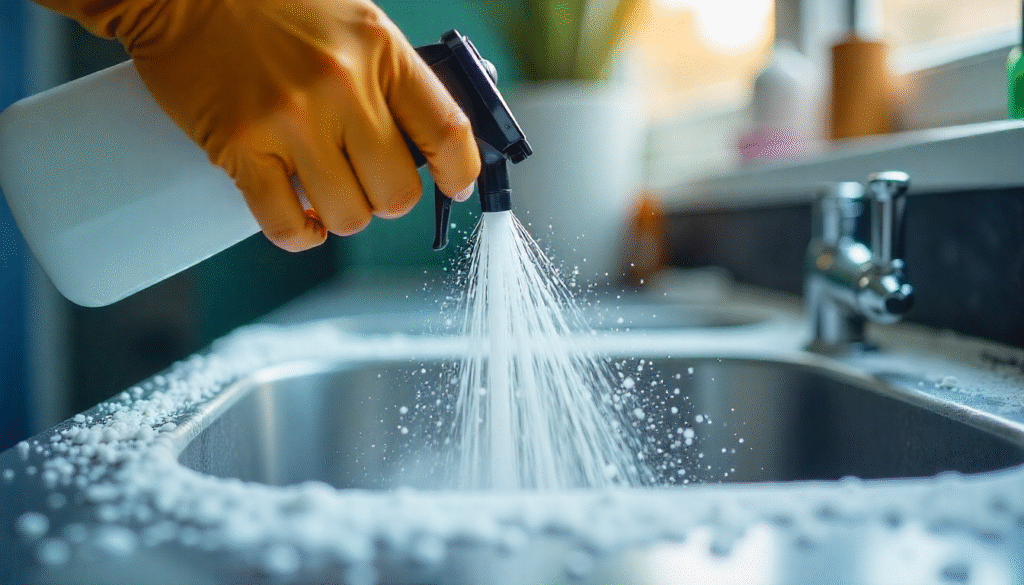
Spray your cleaner (store-bought or DIY) evenly across the sink, faucet, and handles. For natural cleaning, mix equal parts vinegar and water in a spray bottle. Let it sit for 2–3 minutes to loosen soap scum and mineral buildup.
Scrub the Sink Surface and Faucet
Use a soft sponge or microfiber cloth to scrub the basin in circular motions. For corners, edges, and around the faucet, use an old toothbrush or small brush. Don’t forget to clean underneath the faucet handles where grime often hides.
Tackle Tough Stains (Baking Soda + Vinegar Method)
If you notice stubborn spots or stains, sprinkle baking soda directly on them and spray white vinegar over the top. The mixture will fizz, helping lift dirt and mineral deposits. Let it sit for 5 minutes, then scrub gently and rinse.
Clean the Drain and Stopper
The drain area collects toothpaste, soap, and bacteria. Remove the drain stopper (if possible) and clean it using an old toothbrush and mild dish soap. Pour a mix of hot water and vinegar down the drain to eliminate odor and buildup.
Rinse Thoroughly
Once you’re done scrubbing, rinse the sink, faucet, and handles thoroughly with warm water. Make sure no residue from cleaning products or baking soda is left behind.
Dry and Polish for a Lasting Shine
Use a dry microfiber cloth to wipe the sink, faucet, and handles. This prevents water spots and gives your sink a polished, streak-free finish. You can also apply a few drops of baby oil or stainless steel polish on the faucet for extra shine.
Pro Tips for a Cleaner Sink
- Wipe down the sink after each use to prevent buildup.
- Use a daily spray cleaner for a quick refresh.
- Avoid harsh abrasives on delicate surfaces like porcelain or ceramic.
- Keep a small cleaning brush nearby for quick touch-ups.
Key Takeaway
By following these simple steps in this bathroom sink cleaning guide, you can easily maintain a spotless, odor-free sink that looks new every day. Consistency is key — a few minutes of cleaning goes a long way toward keeping your bathroom fresh and hygienic.
Deep Cleaning Tips for Stubborn Stains
Even with regular cleaning, some stains and buildup in your bathroom sink just won’t go away easily. Hard water spots, rust, and soap scum can make your sink look dull or dirty no matter how often you clean it. Don’t worry — this part of our bathroom sink cleaning guide covers proven methods to tackle those tough stains safely and effectively.
1. Remove Hard Water Stains
Hard water stains are caused by mineral deposits like calcium and magnesium left behind after water evaporates. They appear as white or cloudy spots on your sink and faucet.
How to clean:
- Mix equal parts white vinegar and water in a spray bottle.
- Spray the affected area generously and let it sit for 10–15 minutes.
- Scrub gently using a soft sponge or toothbrush.
- Rinse with warm water and dry with a microfibre cloth.
Pro Tip: For extra-tough spots, soak a paper towel in vinegar and place it over the stain for 20 minutes before scrubbing.
2. Get Rid of Soap Scum and Toothpaste Buildup
Soap scum forms when soap reacts with minerals in hard water, leaving behind a cloudy film on the sink surface. Toothpaste residue can also dry and stick to the basin, especially around the drain area.
How to clean:
- Sprinkle baking soda over the affected area.
- Spray or pour vinegar on top and let it fizz for 5 minutes.
- Scrub gently in circular motions with a soft sponge.
- Rinse and wipe dry for a clean, smooth finish.
Pro Tip: Add a few drops of lemon juice to your vinegar spray for extra degreasing power and a fresh scent.
3. Remove Rust and Metal Stains
Rust stains often appear when metal objects like razors or shaving cans are left on a wet sink surface for too long. These stains can be stubborn, especially on porcelain or ceramic sinks.
How to clean:
- Make a paste with baking soda and lemon juice.
- Apply it directly to the rust stain.
- Let it sit for 10 minutes, then scrub with a toothbrush.
- Rinse thoroughly with warm water.
Alternative: You can also use a small amount of hydrogen peroxide on light rust marks — just avoid using it on coloured surfaces.
4. Polish Faucets and Handles
Faucets often lose their shine due to fingerprints, water spots, and soap residue. A quick polish can make a big visual difference.
How to polish:
- Mix a few drops of dish soap with warm water.
- Dip a microfibre cloth in the mixture and wipe down the faucet.
- Rinse with clean water and dry completely.
- For added shine, apply a small amount of baby oil or stainless-steel polish.
5. Clean and Freshen the Drain
Even if your sink looks clean, the drain can trap odour-causing bacteria and residue.
How to clean:
- Pour ½ cup of baking soda down the drain.
- Follow with 1 cup of vinegar.
- Let it fizz for 10–15 minutes.
- Flush with hot water to rinse away buildup and deodorise.
Pro Tip: Do this once a week to keep your drain smelling fresh and prevent clogs.
Key Takeaway
Deep cleaning is essential to maintaining a truly spotless sink. These simple methods from this bathroom sink cleaning guide help you remove even the most stubborn stains—keeping your sink bright, hygienic, and looking new for years.
How to Keep Your Sink Clean Longer
After putting in the effort to deep clean your sink, the goal is to keep it looking spotless for as long as possible. The secret lies in simple, consistent maintenance. This section of the bathroom sink cleaning guide shares smart habits and preventive tips that save you time and effort in the long run.
Wipe Down the Sink Daily
It only takes a few seconds to wipe your sink after each use, but this small step makes a big difference. It prevents soap scum, toothpaste residue, and water stains from hardening or building up over time.
Quick tip: Keep a microfibre cloth or paper towel near the sink for quick daily wipe-downs after brushing or washing hands.
Rinse After Every Use
Rinsing the sink after each use removes leftover soap and toothpaste before they dry. This habit keeps the surface smooth, clean, and free from cloudy buildup.
Pro Tip: Run warm water for a few seconds after each use — it helps prevent mineral deposits, especially if you have hard water.
Use a Weekly Cleaning Routine
A quick 5-minute weekly cleaning routine helps you avoid heavy scrubbing sessions later.
Weekly checklist:
- Spray your cleaner and wipe the basin and faucet.
- Clean the drain area and remove hair or debris.
- Polish the faucet and handles with a dry cloth.
- Refresh the drain with a baking soda and vinegar rinse.
Prevent Hard Water and Soap Stains
To stop buildup before it starts, apply a thin coat of car wax or baby oil to the sink and faucet every few weeks. This creates a protective layer that repels water spots and soap residue.
Tip: Just use a drop on a soft cloth — a little goes a long way!
Keep Cleaning Supplies Handy
Storing your cleaning tools near the bathroom sink makes it easier to stay consistent. A small caddy or basket under the sink can hold everything you need for quick cleanups.
What to include:
- Spray cleaner (vinegar or all-purpose)
- Baking soda container
- Microfibre cloths
- Small brush or toothbrush
- Disinfectant wipes
Avoid Common Habits That Cause Mess
Some everyday habits can make your sink dirty faster. Being aware of them helps prevent future buildup.
Avoid:
- Leaving metal cans (like shaving cream) on the sink — they cause rust stains.
- Using harsh cleaners that scratch delicate surfaces.
- Ignoring the faucet and handles during daily cleanings.
- Letting water sit — it leaves spots and dulls the shine.
Key Takeaway
Keeping your sink clean doesn’t require much effort — just consistency. With these easy daily and weekly habits from this bathroom sink cleaning guide, your sink will stay bright, fresh, and hygienic every day with minimal work.
Common Sink Cleaning Mistakes to Avoid
Even with the best intentions, a few common cleaning mistakes can actually make your bathroom sink dirtier or even damage it over time. To keep your sink looking spotless and lasting longer, this part of the bathroom sink cleaning guide highlights what not to do — and what to do instead.
1. Using Harsh or Abrasive Cleaners
Harsh cleaners like bleach, ammonia, or scouring powders can scratch or dull sink surfaces, especially on porcelain, ceramic, or stainless steel.
Avoid: steel wool, harsh scrub pads, and undiluted bleach.
Instead: Use mild dish soap, baking soda, or vinegar-based solutions for safe yet effective cleaning.
2. Forgetting the Faucet and Handles
Many people focus only on the sink bowl and forget the faucet, handles, and surrounding areas. These spots collect fingerprints, soap residue, and bacteria — making your sink look dull even after cleaning.
Tip: Wipe faucets and handles with a damp microfibre cloth and polish them dry for a shiny, streak-free finish.
3. Ignoring the Drain and Stopper
Your drain may look clean from the surface, but it can trap debris, toothpaste, and bacteria underneath. Neglecting this area often leads to bad odours and slow drainage.
Fix: Remove and scrub the stopper weekly using dish soap and an old toothbrush. Rinse with hot water mixed with vinegar to eliminate odour and buildup.
4. Using the Wrong Tools
Rough sponges, wire brushes, or cheap cleaning rags can scratch your sink’s finish or leave lint behind.
Best tools: soft microfibre cloths, non-scratch sponges, and gentle scrub brushes. They’re tough on dirt but gentle on surfaces.
5. Not Drying the Sink After Cleaning
Leaving the sink wet after cleaning might seem harmless, but it causes water spots and mineral deposits to form. Over time, this dulls the shine and leaves streaks.
Tip: After every cleaning, dry your sink with a clean microfibre towel for a long-lasting polished look.
6. Mixing Cleaning Products
Combining different cleaners — especially bleach and ammonia — can create toxic fumes and damage surfaces.
Never mix vinegar with bleach or ammonia with disinfectants.
Instead: Use one cleaner at a time, rinse thoroughly, then apply another if needed.
7. Skipping Regular Maintenance
Cleaning only when your sink looks dirty allows grime, bacteria, and stains to build up — making future cleanings more difficult.
Better habit: Follow a simple daily wipe and weekly deep clean routine (as explained earlier in this bathroom sink cleaning guide) to maintain a consistent shine.
Key Takeaway
Avoiding these simple mistakes can save your sink from damage and make cleaning easier in the long run. Remember – gentle cleaners, proper tools, and regular maintenance are the keys to a sparkling, long-lasting sink.
FAQs
People often have questions about the best ways to clean, maintain, and protect their bathroom sinks. Here are some of the most common FAQs, answered clearly and simply. These insights from our bathroom sink cleaning guide will help you tackle everyday challenges with confidence.
why choose I clean my bathroom sink?
You should wipe your bathroom sink daily and give it a thorough cleaning at least once a week. Daily cleaning prevents buildup of toothpaste, soap scum, and water stains, while weekly deep cleaning keeps germs and odours away.
What is the best cleaner for bathroom sinks?
Use baking soda and vinegar for porcelain, mild soap for stainless steel, and pH-neutral cleaner for stone sinks.
Can I use bleach to clean my bathroom sink?
Bleach can disinfect your sink, but it should be used sparingly and with caution. Always dilute bleach with water and never mix it with vinegar or ammonia. For regular cleaning, natural options like vinegar or baking soda are safer and just as effective.
How do I remove bad odours from the sink drain?
Bad odours usually come from bacteria or buildup in the drain.
Fix: Pour ½ cup baking soda followed by 1 cup white vinegar down the drain. Let it fizz for 10–15 minutes, then rinse with hot water. This deodorises and clears residue naturally.
What should I do about hard water stains?
Hard water stains are caused by mineral deposits. Spray a vinegar and water mix (1:1 ratio) onto the stains, let it sit for 10 minutes, then wipe clean. For tough spots, soak paper towels in vinegar and lay them over the affected area before scrubbing gently.
Can I use baking soda on all sink types?
Yes — baking soda is safe for most sink materials like porcelain, ceramic, and stainless steel. However, for natural stone sinks (like marble or granite), avoid abrasive scrubbing and test a small area first.
How can I make my sink shine like new?
Dry it after cleaning and buff with a few drops of baby oil or stainless-steel polish.
What’s the easiest way to maintain a clean bathroom sink?
Wipe it daily, deep clean weekly, and refresh the drain monthly.
Key Takeaway
Your bathroom sink doesn’t need expensive products or long scrubbing sessions — just consistent care. These FAQs from our bathroom sink cleaning guide cover the essentials for keeping your sink clean, shiny, and odour-free all year long.
Conclusion
Keeping your bathroom sink clean is essential for a hygienic and inviting home. As this bathroom sink cleaning guide explains, regular cleaning prevents soap scum, hard water stains, and bacteria buildup, keeping your sink fresh and shiny with minimal effort. Using simple tools like microfibre cloths, baking soda, and vinegar, you can easily maintain a spotless sink that looks new every day. A quick daily wipe and weekly deep clean not only enhance your bathroom’s appearance but also extend the life of your sink — making cleanliness simple, effective, and long-lasting.