
Introduction
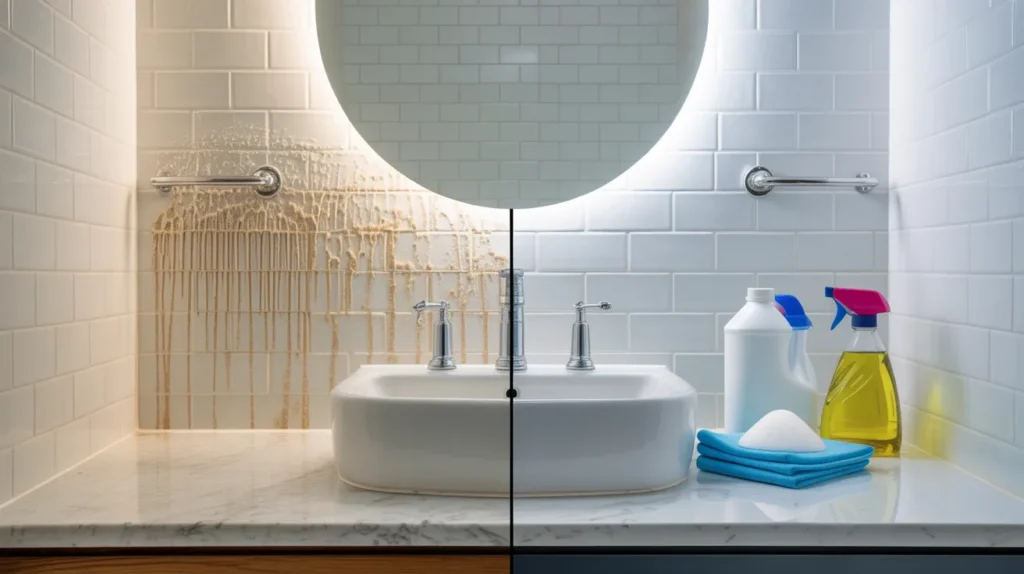
Hard water stains are a common nuisance in many bathrooms, leaving unsightly white or cloudy marks on glass, tiles, faucets, and sinks. These stains occur when mineral-rich water, high in calcium and magnesium, evaporates and leaves deposits behind. Over time, these mineral deposits can build up, making surfaces look dull, dirty, and difficult to clean.
Knowing how to remove hard water stains from bathroom surfaces is essential not only for keeping your bathroom looking polished but also for maintaining hygiene and prolonging the life of your fixtures. In this guide, we’ll cover what hard water stains are, why they form, the most affected surfaces, proven removal methods, and practical tips to prevent them from returning.
This step-by-step approach will help you tackle even the toughest mineral deposits and keep your bathroom sparkling clean.
Table of Contents
What Are Hard Water Stains?
Hard water stains are chalky, white, or cloudy marks that appear on bathroom surfaces when water containing high levels of minerals evaporates. These stains are mainly caused by minerals such as calcium and magnesium that are naturally present in hard water. When the water dries, the minerals remain on the surface, forming a visible residue.
In bathrooms, hard water stains often build up on surfaces that frequently come into contact with water. Over time, these mineral deposits can become thicker and harder to remove, especially if they are not cleaned regularly. The stains may start as light spots but can eventually turn into stubborn crusty deposits.
You can commonly find hard water stains on areas such as shower glass, faucets, tiles, sinks, bathtubs, and toilet bowls. Besides affecting the appearance of your bathroom, these stains can make surfaces look dull and dirty even when they have been cleaned.
Understanding what hard water stains are is the first step in learning how to remove hard water stains from bathroom surfaces effectively and keeping your bathroom looking clean and well-maintained.
What Leads to Hard Water Stains in Bathrooms?
Hard water stains develop when mineral-rich water repeatedly comes into contact with bathroom surfaces and then evaporates. As the water dries, it leaves behind mineral deposits that slowly build up and form visible stains. Several common factors contribute to the formation of these stains in bathrooms.
Mineral-Rich Water
Hard water is water that has an unusually high concentration of minerals, primarily calcium and magnesium. When this water is used for showering, washing hands, or cleaning, the minerals remain on surfaces after the water evaporates. Over time, these deposits accumulate and create the white or cloudy stains commonly seen on bathroom fixtures.
Soap Scum and Mineral Reaction
Soap can react with the minerals in hard water to create a sticky residue called soap scum. This residue often sticks to tiles, shower walls, and glass doors. When mineral deposits combine with soap scum, the stains become thicker and harder to remove.
Standing Water on Surfaces
Water that sits on surfaces such as sinks, faucets, or shower glass tends to dry slowly. As it evaporates, it leaves mineral traces behind. Frequent exposure to standing water allows the stains to build up more quickly.
Poor Ventilation and Slow Drying
Bathrooms with poor ventilation often stay humid for longer periods. This slows the drying process and allows mineral deposits to settle on surfaces more easily. Without proper airflow, hard water stains can develop faster and become more noticeable.
Understanding these causes can help you prevent buildup and make it easier to learn how to remove hard water stains from bathroom surfaces before they become stubborn and difficult to clean.
Bathroom Surfaces Most Affected by Hard Water Stains
Hard water stains can appear on many bathroom surfaces that frequently come into contact with water. When mineral-rich water dries, it leaves behind deposits that slowly build up and become visible stains. Some areas in the bathroom are more likely to develop these stains than others.
Shower Glass Doors
Shower glass doors are one of the most common places for hard water stains. Water droplets often remain on the glass after a shower and dry naturally, leaving behind mineral spots and cloudy marks that reduce the clarity of the glass.
Bathroom Tiles
Tiles and grout lines can easily collect mineral deposits from hard water. Over time, these deposits may create dull spots or white residue on the surface, making the tiles look dirty even after cleaning.
Faucets and Showerheads
Faucets, showerheads, and other metal bathroom fixtures are particularly susceptible to mineral deposits from hard water. The minerals can leave white buildup around the edges and nozzles, which may eventually affect water flow and the appearance of the fixtures.
Sinks and Bathtubs
Sinks and bathtubs often hold standing water for short periods, which allows minerals to settle on the surface as the water evaporates. This can lead to rings, spots, or chalky residue that becomes more noticeable over time.
Toilet Bowls
Hard water stains can also appear inside toilet bowls, especially in areas where water sits for long periods. Mineral deposits may form yellow, brown, or white rings that are difficult to remove if not cleaned regularly.
Recognizing where these stains commonly appear can help you target problem areas and apply the right methods for how to remove hard water stains from bathroom surfaces effectively.
Best Methods to Remove Hard Water Stains from Bathroom Surfaces
Removing mineral buildup does not always require harsh chemicals. Several effective methods can help break down deposits and restore the shine of bathroom fixtures. Choosing the right method depends on the surface and how severe the stains are.
Vinegar and Water Solution
Its mild acidity helps dissolve mineral deposits left behind by hard water.
Spray the solution directly onto the stained surface and allow it to sit for about 10–15 minutes. This gives the vinegar time to break down the mineral buildup. Afterward, gently scrub the area with a sponge or soft brush and rinse with clean water.
Baking Soda Scrub
Baking soda works well for removing stubborn stains because it acts as a gentle abrasive. It helps loosen buildup without damaging most bathroom surfaces.
Sprinkle baking soda directly on the stained area or mix it with a small amount of water to create a paste. Apply the paste to the stain and scrub lightly using a sponge or soft brush. Rinse thoroughly to remove the residue.
Lemon Juice Method
Lemon juice contains natural acids that can help dissolve hard water stains while leaving a fresh scent behind. It is especially useful for cleaning metal fixtures and glass surfaces.
Apply fresh lemon juice directly to the stained area and allow it to sit for several minutes.
Commercial Hard Water Stain Cleaners
In cases where stains are thick or have built up over time, commercial cleaners designed specifically for hard water deposits may be necessary. These products are formulated to break down mineral buildup more quickly and effectively.
Always follow the manufacturer’s instructions and test the cleaner on a small hidden area first to avoid damaging delicate surfaces.
Using a Pumice Stone for Tough Stains
For very stubborn stains, especially inside toilet bowls a pumice stone can be used carefully. The stone helps scrape away mineral deposits without scratching porcelain when used properly.
Wet the pumice stone and the surface before gently rubbing the stained area. Continue lightly scrubbing until the stain begins to fade, then rinse thoroughly.
Using these methods regularly can help maintain clean fixtures and make it easier to manage how to remove hard water stains from bathroom surfaces before the buildup becomes severe.
Step-by-Step Guide to Remove Hard Water Stain
Removing mineral buildup from your bathroom does not have to be difficult if you follow a simple cleaning process. These steps can help you effectively tackle how to remove hard water stains from bathroom surfaces and restore the shine of your fixtures.
1. Identify the Affected Surfaces
Start by checking the areas where hard water stains are most common. Look at shower glass, faucets, tiles, sinks, bathtubs, and toilet bowls. Identifying the problem areas will help you choose the right cleaning method for each surface.
2. Apply the Cleaning Solution
Choose a suitable cleaner such as a vinegar solution, lemon juice, baking soda paste, or a commercial hard water stain remover. Apply the solution directly to the stained surface, making sure the entire affected area is covered.
3. Let the Cleaner Sit
This waiting time helps break down the mineral deposits and makes the stains easier to remove. Most cleaners work best when left for about 10 to 15 minutes.
4. Scrub the Surface Gently
Use a soft sponge, cloth, or brush to scrub the area gently. Avoid using harsh or abrasive tools that could scratch delicate surfaces like glass or polished metal fixtures.
5. Rinse Thoroughly
After scrubbing, rinse the surface with clean water to remove the loosened mineral deposits and any remaining cleaner. Proper rinsing prevents residue from building up again.
6. Dry the Surface
Finally, wipe the area with a clean dry cloth or towel. Drying the surface helps prevent new mineral deposits from forming and keeps the bathroom looking clean and polished.
Following these steps regularly will make how to remove hard water stains from bathroom surfaces much easier and prevent stubborn buildup from developing over time.
Natural vs Chemical Cleaners for Hard Water Stains
When learning how to remove hard water stains from bathroom surfaces, you can choose between natural cleaning solutions and chemical cleaners. Both options can be effective, but they work in different ways and are suitable for different situations.
Natural Cleaning Solutions
Natural cleaners are popular because they are simple, affordable, and usually safer for regular use. Common natural ingredients like vinegar, baking soda, and lemon juice can help dissolve mineral deposits and remove light to moderate hard water stains.
One of the main advantages of natural cleaners is that they are less likely to damage surfaces when used correctly. They also produce fewer harsh fumes, making them a good option for households that prefer eco-friendly cleaning methods.
However, natural solutions may require more time and effort when dealing with heavy mineral buildup. In some cases, repeated cleaning may be necessary to fully remove stubborn stains.
Chemical Cleaning Products
Chemical cleaners are specially formulated to break down mineral deposits quickly and effectively. Many commercial products contain stronger ingredients that can dissolve calcium and magnesium buildup faster than natural solutions.
These cleaners are often the best choice for thick or long-standing hard water stains that natural methods cannot easily remove. They are designed to work on surfaces such as glass, tiles, faucets, and toilet bowls.
While chemical cleaners can be highly effective, it is important to use them carefully. Always follow the instructions on the product label and ensure the bathroom is well ventilated during cleaning.
Choosing the Right Option
The best choice depends on the severity of the stains and the type of surface you are cleaning. Natural cleaners work well for regular maintenance and light stains, while chemical products may be needed for tougher buildup.
Using the right cleaner at the right time will make how to remove hard water stains from bathroom surfaces much easier and help keep your bathroom looking clean and well maintained.
How to Prevent Hard Water Stains in the Bathroom
It’s generally simpler to stop hard water stains from forming than to remove them once they appear. By following a few simple habits, you can reduce mineral buildup and make how to remove hard water stains from bathroom surfaces much less of a problem.
Wipe Surfaces After Use
One of the easiest ways to prevent hard water stains is to wipe down wet surfaces after using the bathroom. Use a clean cloth, towel, or squeegee to remove water from shower glass, faucets, and tiles. This stops minerals from drying on the surface and forming stains.
Install a Water Softener
A water softener helps reduce the amount of calcium and magnesium in your water supply. By lowering the mineral content, it can significantly reduce the formation of hard water stains throughout your bathroom.
Use Protective Bathroom Cleaners
Applying a protective cleaner or surface spray can help prevent mineral deposits from sticking to bathroom fixtures. These products create a thin layer that makes it harder for stains to build up over time.
Clean Bathroom Surfaces Regularly
Regular cleaning helps remove small mineral deposits before they become stubborn stains. Wiping down sinks, faucets, and shower areas at least once a week can keep your bathroom surfaces looking clean and shiny.
By practicing these simple prevention methods, you can reduce buildup and spend less time worrying about how to remove hard water stains from bathroom surfaces in the future.
Mistakes to Avoid When Removing Hard Water Stains
While learning how to remove hard water stains from bathroom surfaces, it is important to avoid certain cleaning mistakes. These mistakes can damage bathroom fixtures or make the stains harder to remove.
Using Abrasive Scrubbing Tools
Scrubbing hard water stains with rough tools such as steel wool or very hard brushes can scratch surfaces like glass, chrome, and ceramic. These scratches not only damage the surface but can also make it easier for stains to build up again. It is better to use a soft sponge, cloth, or non-abrasive brush.
Leaving Cleaners on Surfaces for Too Long
Some people believe that leaving a cleaner on the surface for a long time will remove stains faster. However, certain cleaners can damage finishes if they remain too long. Always follow the recommended waiting time and rinse the surface thoroughly after cleaning.
Ignoring Regular Maintenance
Hard water stains often become stubborn because they are left untreated for long periods. Waiting too long between cleanings allows mineral deposits to build up and harden. Cleaning bathroom surfaces regularly helps prevent this problem.
Mixing Different Cleaning Products
Mixing different cleaning products can sometimes create harmful chemical reactions. For example, combining certain cleaners may produce strong fumes or reduce their effectiveness. It is always safer to use one product at a time and follow the instructions on the label.
Avoiding these mistakes will make how to remove hard water stains from bathroom surfaces safer, easier, and more effective while helping protect your bathroom fixtures.
FAQs
What removes hard water stains the fastest?
Acid-based cleaners usually remove hard water stains the fastest because they dissolve mineral deposits quickly. Household ingredients such as white vinegar or lemon juice can work well for light stains, while commercial hard water cleaners may be more effective for heavy buildup.
Can vinegar damage bathroom surfaces?
Vinegar is generally safe for many bathroom surfaces such as glass, chrome, and ceramic. However, it should not be used on natural stone surfaces like marble or granite because its acidity can damage the finish. It is always a good idea to test the cleaner on a small hidden area first.
How often should I clean bathroom surfaces to prevent hard water stains?
For best results, lightly clean bathroom surfaces at least once a week. Areas that frequently come into contact with water, such as shower doors and faucets, may benefit from quick daily wiping to prevent mineral deposits from forming.
Are hard water stains permanent?
Hard water stains are usually not permanent, but they can become difficult to remove if they are left untreated for a long time. Regular cleaning and proper maintenance make it easier to remove stains and keep bathroom surfaces looking clean.
Conclusion
Hard water stains are a common problem in many bathrooms, but they can be removed with the right cleaning methods. Understanding the causes of mineral buildup and using effective solutions such as vinegar, baking soda, or specialized cleaners can help restore the shine of bathroom fixtures.
Following simple cleaning steps and maintaining regular bathroom care will make how to remove hard water stains from bathroom surfaces much easier. With proper prevention and consistent cleaning, you can keep your bathroom surfaces free from stubborn mineral deposits and looking fresh and well maintained.