
Introduction
A clean, shiny sink makes any kitchen or bathroom look fresh and inviting. Ceramic sinks are popular because of their smooth, glossy finish and durability, but even the toughest ceramic surfaces can develop stains, soap scum, hard water deposits, and discoloration over time.
Ceramic sink cleaning is the key to keeping your sink spotless, hygienic, and long-lasting. Regular maintenance not only improves appearance but also prevents bacteria buildup, unpleasant odors, and permanent damage.
In this guide, we’ll show you everything you need to know about ceramic sink cleaning—from everyday tips and natural cleaning methods to removing tough stains and keeping your sink shining like new.
Table of Contents
What Is Ceramic Sink Cleaning?
Ceramic sink cleaning is the process of removing dirt, stains, bacteria, and buildup from a ceramic sink to keep it clean, shiny, and safe to use. Ceramic sinks have a smooth, glossy surface, but over time they can collect soap residue, hard water minerals, food particles, and grease. Without regular cleaning, these deposits can make the sink look dull and stained.
Unlike some other sink materials, ceramic is designed to be durable but still needs gentle care. Ceramic sink cleaning focuses on using mild, non-abrasive cleaners that lift away grime without scratching or damaging the surface. This helps maintain the sink’s natural shine while protecting the protective glaze that keeps it smooth and stain-resistant.
The goal of ceramic sink cleaning is not just to improve appearance, but also to maintain hygiene. Sinks are used daily for washing hands, dishes, and food, which makes them a common place for germs and odors to build up. Proper cleaning removes bacteria and prevents unpleasant smells, making the sink safer for everyday use.
When done regularly, ceramic sink cleaning also helps prevent long-term damage. Mineral deposits from hard water and leftover soap can slowly wear down the finish if left untreated. Keeping the sink clean ensures it stays bright, smooth, and easy to maintain for years.
Why Ceramic Sink Cleaning Is Important
Ceramic sink cleaning is not just about keeping your sink looking nice—it plays a big role in hygiene, durability, and everyday comfort. Because ceramic sinks are used constantly for washing hands, dishes, food, and household items, they quickly become a place where dirt, bacteria, and stains can build up.
One of the biggest reasons ceramic sink cleaning is important is to prevent staining. Hard water minerals, soap residue, and food particles can stick to the smooth ceramic surface. If these are not removed regularly, they can leave behind yellow, gray, or white marks that make the sink look old and dirty.
Regular ceramic sink cleaning also helps protect the sink’s glossy finish. Ceramic sinks have a protective glaze that gives them their smooth, shiny appearance. When grime and mineral buildup stay on the surface for too long, they can slowly wear down this coating. Keeping the sink clean helps preserve its shine and prevents permanent damage.
Hygiene is another key benefit. A dirty sink can hold bacteria and cause unpleasant odors. By cleaning your ceramic sink often, you remove germs and leftover food particles, making the sink safer for washing dishes and preparing food.
In short, proper ceramic sink cleaning keeps your sink fresh, bright, and safe to use while also extending its lifespan.
Common Problems in Ceramic Sinks
Even with regular use, ceramic sinks can develop several issues over time. Understanding these problems makes ceramic sink cleaning easier and more effective, because you know exactly what you are dealing with.
Mineral buildup from hard water is a common challenge for ceramic sinks.As water dries, minerals like calcium and magnesium remain on the surface, often leaving behind white or cloudy marks that make the sink appear dull.
Soap scum is another frequent issue. Soap and detergent do not always rinse away completely. They mix with water minerals and create a thin, sticky layer that builds up over time. This film can make the ceramic sink feel rough and look dirty.
Rust marks can also appear, especially around the drain or where metal items are left in the sink. Even though ceramic does not rust, metal objects can leave orange or brown stains on the surface.
Food and beverage stains are common in kitchen sinks. Coffee, tea, sauces, and colourful foods can leave behind dark marks if they are not cleaned quickly.
A dull or cloudy surface is often the result of all these problems combined. When mineral deposits, soap scum, and stains build up, the sink loses its shine and no longer looks clean, even after rinsing.
Best Tools for Ceramic Sink Cleaning
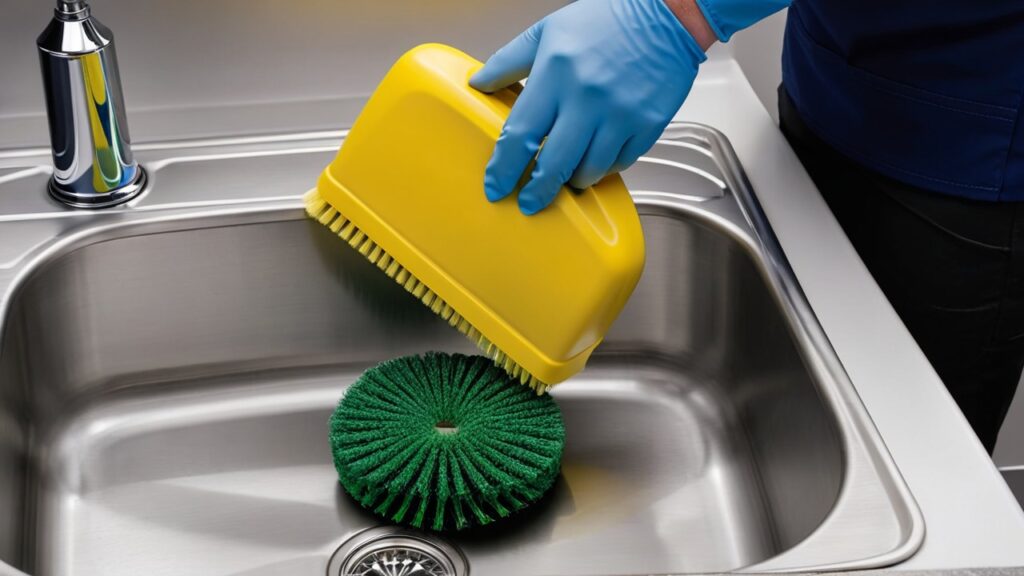
Using the right tools is essential for effective ceramic sink cleaning. Because ceramic has a smooth, glazed surface, it should always be cleaned with gentle materials that remove dirt without causing scratches.
A soft sponge is one of the most important tools. It helps lift away food, soap, and grease without damaging the ceramic finish. A microfiber cloth is also very useful because it absorbs water and traps dust, making it perfect for drying and polishing the sink.
A soft brush, such as an old toothbrush or a small cleaning brush, works well for hard-to-reach areas around the drain, edges, and corners. These spots often collect grime that a sponge cannot reach easily.
For cleaning products, baking soda is a gentle scrub that removes stains without scratching. White vinegar is effective at dissolving mineral deposits and removing soap scum. Lemon is great for cutting grease and leaving a fresh smell. A mild dish soap is ideal for everyday cleaning and removing oily residue.
Together, these tools and ingredients make ceramic sink cleaning simple, safe, and effective.
How to Clean a Ceramic Sink (Step-by-Step)
Following a simple routine makes ceramic sink cleaning quick and effective. These steps will help you remove dirt, stains, and buildup without harming the sink’s surface.
Rinse the sink
Start by rinsing the entire sink with warm water. This washes away loose food particles, dust, and surface dirt, making the cleaning process easier.
Apply baking soda
Sprinkle baking soda evenly over the sink. Baking soda acts as a gentle scrub that helps loosen stains and remove odors without scratching the ceramic.
Add vinegar
Slowly pour white vinegar over the baking soda. You will see it fizz, which means it is breaking down grease, soap scum, and mineral deposits.
Gently scrub
Use a soft sponge or brush to gently scrub the sink, focusing on stained areas, around the drain, and along the edges. Avoid using anything too rough, as it can damage the ceramic finish.
Rinse and dry
Thoroughly flush the sink with warm water until all leftover residue is gone. Then dry it with a microfiber cloth to prevent water spots and leave a shiny finish.
This simple method keeps ceramic sink cleaning safe, natural, and highly effective.
Natural Methods for Ceramic Sink Cleaning
Natural products are a safe and effective way to keep your sink clean. These methods are ideal for regular ceramic sink cleaning because they remove stains and buildup without harming the ceramic surface.
Baking soda and vinegar is one of the most popular natural solutions. Baking soda gently scrubs away dirt, while vinegar breaks down hard water deposits and soap scum. Together, they lift stains and restore the sink’s shine.
Lemon and salt is another great option. Lemon helps dissolve grease and mineral marks, while salt provides gentle scrubbing power. This method is especially useful for removing food and beverage stains in kitchen sinks.
Dish soap and warm water works well for everyday cleaning. A few drops of mild dish soap mixed with warm water can remove grease, food particles, and surface dirt, keeping the sink fresh between deep cleanings.
Using these natural methods regularly makes ceramic sink cleaning simple, affordable, and environmentally friendly.
Effective Methods for Removing Stubborn Ceramic Sink Stains
Some stains are harder to remove and need extra attention. Proper ceramic sink cleaning helps break down these stubborn marks without damaging the surface.
Removing hard water stains
Hard water stains appear as white or cloudy spots. To remove them, apply white vinegar to the stained areas and let it sit for a few minutes. This helps dissolve the mineral buildup so it can be wiped away easily.
Removing rust stains
Rust stains usually come from metal items left in the sink. Create a baking soda paste, spread it over the stains, and gently rub with a soft sponge to remove them.
Removing grease and food marks
Greasy residue and food stains can be removed with warm water and mild dish soap. For darker stains, baking soda can be added to give extra cleaning power.
Regular ceramic sink cleaning prevents these tough stains from becoming permanent and keeps your sink looking bright and fresh.
What to Avoid When Cleaning a Ceramic Sink
To protect the surface, ceramic sink cleaning should always be done carefully. Using the wrong products or tools can damage the smooth, glossy finish and make the sink more likely to stain.
Avoid using abrasive scrubbers such as steel wool or rough scouring pads. These can scratch the ceramic glaze, making the sink look dull and allowing dirt to stick more easily in the future.
Do not use harsh chemicals or strong bleach. These products can weaken the ceramic coating and cause discoloration over time. While they may remove stains quickly, they also reduce the life of the sink.
Stay away from metal brushes or scrapers. These tools can leave marks and scratches that are difficult to repair.
Also avoid letting strong cleaners sit for too long on the surface. Even mild products should be rinsed away after cleaning to keep the ceramic finish in good condition.
Gentle products and soft tools are always the best choice for safe and effective ceramic sink cleaning.
How Often Should You Do Ceramic Sink Cleaning?
Regular ceramic sink cleaning helps keep your sink looking fresh and prevents stains from becoming difficult to remove. The right cleaning schedule depends on how often the sink is used, but a simple routine works for most homes.
For daily care, a quick rinse and wipe with a soft cloth is enough to remove water spots, soap residue, and food particles. This keeps the surface from developing buildup.
For weekly cleaning, use mild dish soap or a baking soda and vinegar mixture to clean the entire sink. This removes grease, light stains, and mineral deposits before they become permanent.
For monthly deep cleaning, focus on stubborn stains, the drain area, and the edges of the sink. This deeper cleaning restores shine and keeps the ceramic surface smooth and bright.
Following this schedule makes ceramic sink cleaning easier and keeps your sink in excellent condition all year round.
Tips to Keep Your Ceramic Sink Clean Longer
Good habits can make ceramic sink cleaning much easier and help your sink stay shiny for longer. Small daily actions prevent dirt and stains from building up on the surface.
Always wipe the sink after use. Drying the surface with a microfiber cloth removes water droplets that can leave mineral spots and streaks.
Try to avoid leaving standing water in the sink. When water dries, it leaves behind minerals that cause hard water stains. A quick wipe keeps the surface clear.
Do not leave metal objects such as cans, utensils, or sponges sitting in the sink. These can cause rust marks and discoloration on the ceramic surface.
Using a sink mat or rinsing away food and liquids quickly also helps prevent stains and scratches.
By following these tips, ceramic sink cleaning becomes easier and your sink stays bright and fresh with less effort.
FAQs
Can I use vinegar on a ceramic sink?
Yes! White vinegar is safe for ceramic sinks and is excellent for removing hard water stains and soap scum. Always rinse thoroughly after use.
Is baking soda safe for ceramic sinks?
Absolutely. Baking soda is a gentle, natural abrasive that lifts stains without scratching the surface, making it perfect for regular cleaning.
How do I make my ceramic sink shine?
After cleaning, rinse the sink with warm water and dry it with a microfiber cloth. You can also rub a little lemon juice for extra shine and freshness.
How do I remove yellow stains from a ceramic sink?
Yellow stains are often caused by mineral deposits or prolonged exposure to certain liquids. Cover the stain with a baking soda and water blend, let it rest for a few minutes, then wipe and rinse it away.
Can I use harsh chemicals to clean ceramic sinks?
It’s not recommended. Harsh chemicals and bleach can damage the ceramic glaze over time. Stick to mild cleaners or natural methods for best results.
Conclusion
Ceramic sink cleaning is essential for keeping your sink hygienic, shiny, and long-lasting. Regular cleaning prevents stains, hard water buildup, soap scum, and bacteria from accumulating on the ceramic surface.
By using gentle tools like soft sponges, microfiber cloths, and natural cleaners such as baking soda, vinegar, and lemon, you can maintain a sparkling sink without damaging its glossy finish. Following simple habits—like wiping after each use, drying the surface, and performing weekly and monthly cleanings—makes maintenance easy and effective.
With consistent care, your ceramic sink will not only look beautiful but also remain safe and functional for years to come.