
Introduction
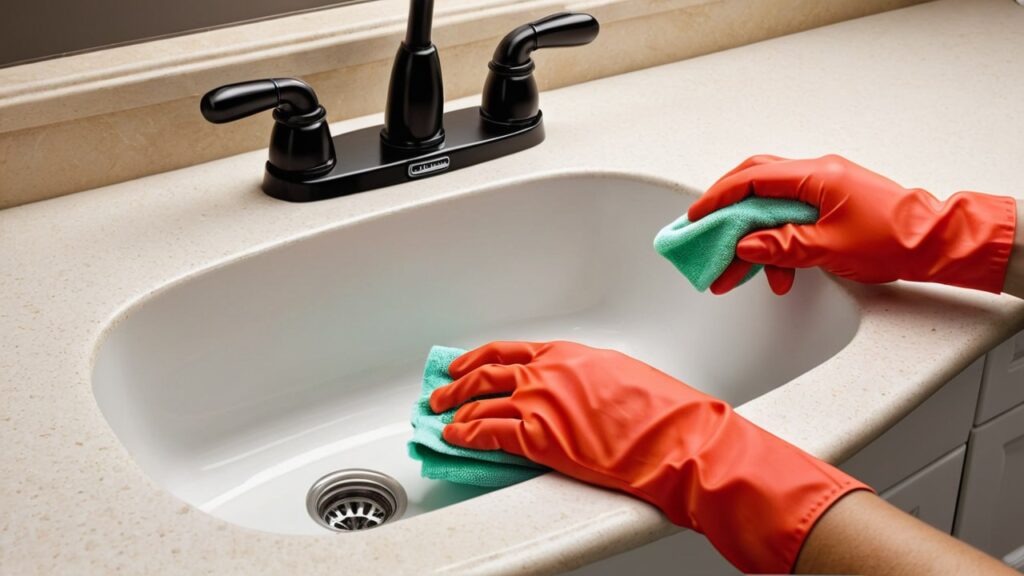
A bright, spotless sink instantly improves the appearance and cleanliness of any kitchen or bathroom. With daily use, however, sinks often develop stains caused by mineral-rich water, soap buildup, rust, or food spills. If these marks are ignored, they can make the sink look dull and become harder to clean over time.
This guide explains how to remove sink stains using easy natural solutions, common household tools, and safe store-bought cleaners. Whether the stains are light or deeply set, these proven steps will help bring back your sink’s shine and reduce future staining.
Table of Contents
Why Sink Stains Occur
Stains in sinks are very common in both kitchens and bathrooms. Knowing what causes them helps you choose the right cleaning method and makes it easier to remove sink stains effectively.
Hard Water Deposits
When water contains large amounts of minerals like calcium and magnesium, it can leave behind white or cloudy marks on sink surfaces. These mineral deposits slowly build up, especially around faucets and drains, and can be difficult to remove without the right cleaner.
Soap and Detergent Buildup
Hand soap, dish soap, and cleaning products often leave a thin layer behind if the sink is not rinsed well. Over time, this residue mixes with minerals in water, forming stubborn stains the clothes that reduce the sink’s shine.
Rust and Metal Stains
Sinks made of metal or fitted with metal fixtures can develop rust if moisture remains on the surface for too long. Rust stains usually appear as brown or reddish spots and are among the hardest stains to clean.
Mold and Mildew Growth
Damp conditions around sinks create the perfect environment for mold and mildew. These stains often appear dark green or black and usually form near edges, drains, or the base of the faucet. Besides looking unpleasant, they can also trap bacteria.
Food and Drink Stains (Kitchen Sinks)
Kitchen sinks are frequently exposed to coffee, tea, sauces, and other deeply colored foods. If these substances are not cleaned promptly, they can leave behind stubborn stains.
Summary:
Sink stains are commonly caused by mineral deposits, soap residue, rust, mold, and food spills. Identifying the cause makes it easier to remove sink stains and keep the sink clean and polished.
Materials and Tools You Need
Using the right supplies makes cleaning faster, safer, and more effective. Having these items ready will help you remove sink stains with less effort.
1. Baking Soda
Baking soda works as a mild abrasive that helps lift stains without damaging the sink. It is effective against soap residue, mineral buildup, and light discoloration.
2. White Vinegar
Vinegar’s acidic nature helps dissolve mineral deposits and water stains. When combined with baking soda, it creates a powerful natural cleaning reaction.
3. Lemon Juice
Lemon juice helps break down rust and discoloration naturally. It also leaves the sink smelling clean and fresh after use.
4. Commercial Cleaners
For stains that don’t respond to natural solutions, sink-safe commercial cleaners can be helpful. Use only non-toxic products and follow label directions carefully to protect your skin.
5. Cleaning Tools
Soft scrub brush: Removes stains without scratching
Microfiber cloth: Ideal for wiping and polishing
Old toothbrush: Perfect for cleaning tight areas near drains and faucets
Step-by-Step Methods to Remove Sink Stains
Cleaning sink stains is simple when you use the right method for each type of stain.Remove Light Stains Using Baking Soda and Vinegar .
For common stains caused by soap or hard water
Apply baking soda over the stained sections of the sink.Slowly pour vinegar on top and allow it to bubble.Leave the mixture for 10–15 minutes.Clean the stain gently with a soft brush or cloth to avoid scratches.Rinse well with warm water.
Why it works: Baking soda loosens grime while vinegar breaks down mineral deposits.
Remove Rust Marks with Lemon and Salt
For brown or reddish rust stains:
Cover the rusted area with salt.Add lemon juice until the stain is fully wet.Allow it to sit for 15–20 minutes.Scrub lightly and rinse clean.
Tip: Repeat the process if the rust stain remains.
Using Commercial Sink Cleaners
If natural methods are not enough:
Select a cleaner suitable for your sink material.Apply it following the label instructions.Focus on stained areas while scrubbing gently.Rinse thoroughly after cleaning.
Tip: Avoid strong chemicals on stone, copper, or enamel sinks.
How to Prevent Future Sink Stains
Wipe the sink dry after each use:
Clean regularly with mild products .If mineral deposits are a frequent issue, consider installing a water softener.Do not leave acidic foods or liquids sitting in the sink
Summary:
Using the right cleaning steps and maintaining your sink regularly makes it much easier to remove sink stains and keep the surface hygienic.
Tips and Tricks for Stubborn Stains
Some stains require extra time and care. These tips help tackle tougher buildup effectively.
Allow Cleaners More Time to Work
Let natural cleaners sit longer on heavy stains so they can fully break down mineral or rust deposits.
Clean Tight Spaces with a Toothbrush
A toothbrush helps reach corners and small gaps where grime collects.
Mix Cleaning Methods When Needed
If one method doesn’t work, try a combination of natural and commercial solutions.
Stick to a Regular Cleaning Routine
Daily wiping and weekly deep cleaning prevent stains from becoming permanent.
Avoid Harsh Scrubbing Tools
Always use soft tools to prevent scratches on delicate sink surfaces.
Summary:
With the right approach and consistency, even tough stains can be removed, keeping your sink clean and attractive.
FAQs
What is the simplest natural way to remove sink stains?
Using baking soda and vinegar is one of the easiest and most effective natural methods.
Does lemon juice work on rust stains?
Yes, lemon juice combined with salt helps break down rust naturally.
How often should sinks be cleaned to avoid stains?
Light cleaning daily and deep cleaning once a week works best.
Are all cleaners safe for every sink type?
No. Some materials require gentle cleaners. Always check Always check product labels.
Can sink stains be completely avoided?
While stains can’t be eliminated entirely, regular cleaning and drying reduce them significantly.
Conclusion
Sink stains are common, but they don’t have to affect the cleanliness or appearance of your kitchen or bathroom. By understanding the causes and using the right tools and techniques, you can easily remove sink stains and maintain a bright, polished surface.
Whether you prefer natural solutions or commercial cleaners, consistent care makes all the difference. With these practical steps, keeping your sink clean becomes simple and stress-free.