
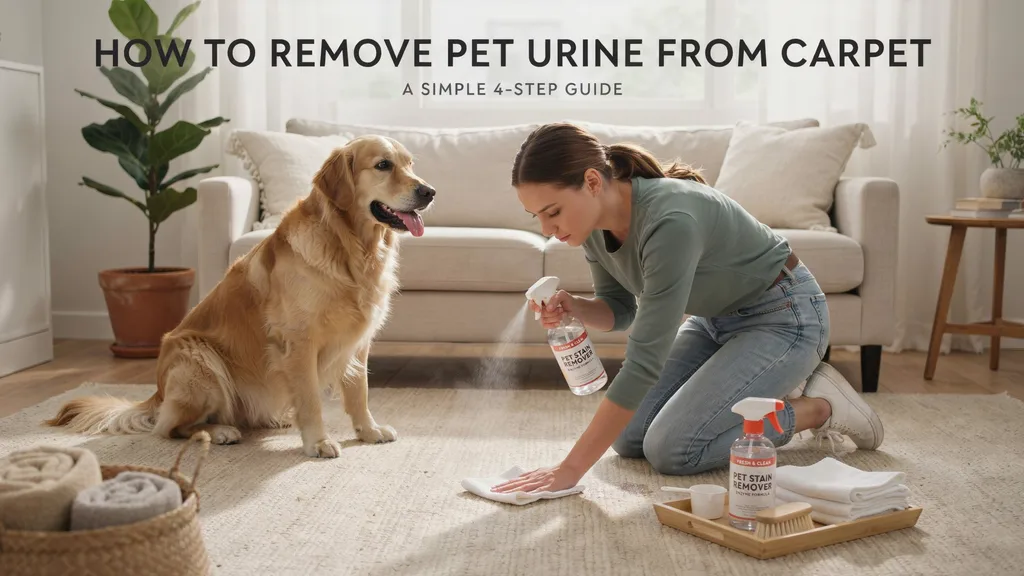
Introduction
How to remove pet urine from carpet can be a frustrating task, especially when the stain leaves behind a lingering odor. The key is to act quickly, absorb as much urine as possible, and use the right cleaning method to treat the affected area. In this guide, you’ll learn simple steps to remove fresh and old pet urine stains and keep your carpet smelling fresh.
Table of Contents
How to Remove Pet Urine From Carpet: A Complete Step-by-Step Guide
Pet accidents on carpet are common, but pet urine can leave behind more than a visible stain. If urine soaks deep into the carpet fibers or padding, it can create a strong odor that returns even after the surface looks clean.
The good news is that you can often handle pet urine stains at home with the right approach. The key is to act quickly, absorb as much urine as possible, use an appropriate pet urine cleaner, and allow the carpet to dry completely.
In this guide, you’ll learn how to remove pet urine from carpet, how to deal with old stains, how to eliminate urine odors, and which cleaning mistakes to avoid.
What Makes Pet Urine So Hard to Clean From Carpet?
Pet urine can travel below the surface of the carpet. When an accident happens, liquid may soak through the carpet fibers and reach the backing or padding underneath.
This is one reason a carpet may look clean but still smell like urine.
Pet urine can also leave compounds behind as it dries. If these residues are not properly treated, moisture or humidity can sometimes cause the odor to become noticeable again.
Simply cleaning the visible stain may not fully solve the problem. The cleaner needs to reach the deeper areas where the urine has soaked.
What You’ll Need to Remove Pet Urine From Carpet
Before you start, gather the following supplies:
- Paper towels or clean white towels
- Clean water
- A pet urine enzyme cleaner
- Rubber gloves
- A soft cloth or sponge
- A vacuum cleaner
- A fan for drying
- A blacklight/UV flashlight for locating old stains, if needed
Read the product label carefully and use it according to the recommended instructions. If you’re cleaning a delicate or specialty carpet, check the manufacturer’s care instructions first.
How to Remove Fresh Pet Urine From Carpet
Fresh urine is generally easier to deal with because it has had less time to soak deeply into the carpet and dry.
Step 1: Blot the Urine Immediately
The first thing to do is absorb as much urine as possible.
Place several layers of paper towels or a clean white towel over the wet area. Apply firm pressure to soak up the liquid. Replace the towels when they become saturated and continue until you can no longer remove much moisture.
Do not scrub the carpet. Scrubbing can spread the urine over a larger area and push it deeper into the fibers.
Step 2: Use a Suitable Pet Urine Cleaner
After removing as much urine as possible, apply a cleaner designed specifically for pet urine.
Enzyme-based pet urine cleaners are commonly used because they are designed to break down organic residues associated with pet accidents rather than simply covering the smell with fragrance.
Apply enough product to treat the affected area according to the manufacturer’s instructions. If the urine has soaked deeply, surface-level spraying may not be enough.
Step 3: Let the Cleaner Sit and Work Properly
Don’t immediately wipe away an enzyme cleaner unless the product instructions tell you to.
Different products have different recommended contact times. Follow the product instructions and allow enough time for the cleaner to work effectively.
Step 4: Remove Excess Moisture
After the suggested treatment time, blot away any remaining moisture as directed on the product label.
Use fresh, clean towels to gently blot the affected area. Avoid aggressive rubbing.
Step 5: Let the Carpet Dry Fully
Good ventilation can help the carpet dry faster.
Open windows if appropriate, use fans, and keep people and pets away from the damp area until it is completely dry.
How to Remove Old or Dried Pet Urine From Carpe
Old pet urine stains can be more difficult because the urine may have already soaked into the carpet backing or padding.
Start by identifying the full affected area. The visible stain may be smaller than the area contaminated underneath.
A UV or blacklight can sometimes help locate older urine spots that are difficult to see under normal lighting. However, not every glowing spot necessarily indicates urine, so use it as a guide rather than definitive proof.
Once you’ve located the affected area:
- Vacuum loose dirt from the carpet.
- Apply an appropriate pet urine cleaner according to its instructions.
- Make sure the treatment reaches the contaminated area.
- Allow the recommended contact time.
- Blot or extract excess moisture as directed.
- Let the carpet dry completely.
- Repeat the treatment if the odor remains and the product instructions allow it.
If the smell continues after proper treatment, the urine may have reached the padding or even the subfloor.
How to Get Pet Urine Smell Out of Carpet
Removing the smell requires more than making the carpet smell fresh temporarily.
Air fresheners and heavily scented products may mask an odor without removing the source. If urine residue remains in the carpet or padding, the smell can return.
For persistent odors:
- Locate the entire affected area.
- Use a cleaner specifically made to treat pet urine on carpets.
- Follow the product’s recommended contact time.
- Avoid oversaturating the carpet unnecessarily.
- Allow the area to dry completely.
- Check the padding if the odor continues.
If your carpet smells like urine again after it dries, this can be a sign that the original contamination was deeper or larger than the area that was treated.
Can Vinegar and Baking Soda Get Pet Urine Out of Carpet?
Vinegar and baking soda are popular household cleaning ingredients, but they should not automatically be considered a complete solution for pet urine.
Vinegar may help with some surface odors, while baking soda can absorb certain odors. However, persistent pet urine contamination may require a cleaner specifically formulated for the problem.
If you’re using a commercial product to clean pet urine, check the directions on the container before applying it. Use the product as recommended and don’t combine it with another cleaner unless the manufacturer says the two products are compatible.
Mixing cleaning chemicals can sometimes produce harmful or unwanted reactions. Using one suitable product according to its instructions is the safer approach.
What Mistakes Should You Avoid When Removing Pet Urine From Carpet?
The wrong cleaning technique can spread the stain, leave behind an odor, or make the carpet harder to dry. Keep the following points in mind when treating a pet accident.
Don’t Scrub the Affected Area
Avoid rubbing the carpet forcefully. This can push urine farther into the carpet fibers and spread the affected area instead of containing it.
Avoid Flooding the Carpet
Adding a lot of water won’t necessarily produce better results. Too much liquid can move the urine into nearby areas and increase the amount of time needed for the carpet to dry.
Don’t Rely on Perfume to Hide the Odor
Scented sprays can make a room smell fresher temporarily, but they don’t necessarily remove the material responsible for the urine odor. Treating the source is more effective than simply covering it.
Remember the Padding Beneath the Carpet
When liquid reaches the padding underneath, cleaning the top layer alone may leave behind moisture and odor.
Always Test a New Cleaner
Before applying a cleaning solution over a large or noticeable area, test it on a small hidden section. This can help you check for possible discoloration or damage before treating the main stain.
Make Sure the Carpet Dries Properly
Don’t leave the treated area wet for an extended period. Improve air circulation and allow the carpet to dry fully after cleaning.
Why Can a Urine Smell Remain After Cleaning the Carpet?
A carpet can appear spotless and still have an unpleasant odor. This usually means some part of the contamination hasn’t been completely addressed.
Urine May Have Soaked Into the Padding
The layer underneath your carpet can absorb liquid just like the carpet itself. If urine reaches this padding, it can continue producing an odor even when the carpet surface looks clean.
The Contaminated Area May Extend Beyond the Stain
What you see on the carpet isn’t always the complete affected area. Urine can travel outward beneath the surface, making the actual contaminated section larger than the visible mark.
The Treatment May Not Have Reached the Deeper Layers
Surface cleaning may not be sufficient when urine has traveled below the carpet fibers. Any untreated residue underneath can continue contributing to the smell.
The Cleaner May Require More Contact Time
Certain cleaning products need to remain on the affected area for a specified period. Removing them too soon may prevent the product from working as intended. Always use the contact time stated by the manufacturer.
The Carpet Could Still Be Damp
Remaining moisture can make odors easier to notice. Give the carpet plenty of time to dry before judging whether the treatment has solved the odor problem.
Multiple Accidents May Have Occurred
If your pet has repeatedly used the same location, urine residue can build up over time. A repeated or heavy contamination may require more thorough treatment than a single fresh accident.
If the odor keeps coming back despite following the cleaning instructions, having the carpet evaluated by a professional may be the next step.
When Should You Consider Professional Carpet Cleaning?
A minor, fresh accident may be manageable with household cleaning methods. More serious cases, however, can benefit from professional equipment and experience.
Consider professional assistance when:
- A significant section of carpet has been affected.
- Your pet has repeatedly urinated in the same location.
- The urine smell remains after you have cleaned the area properly.
- Liquid appears to have entered the carpet padding.
- Urine stains are present in several areas.
- The carpet needs specialized care.
- You suspect the urine has reached the floor beneath the carpet.
A professional can examine the affected area and determine whether the contamination is limited to the carpet or has moved into the padding or lower layers. They can then select a cleaning method suited to the carpet and the extent of the problem.
How Can You Prevent Your Pet From Using the Carpet Again?
Stopping repeat accidents can save you from dealing with the same stain and odor over and over.
Deal with new accidents as soon as you notice them. Quick action reduces the amount of time urine has to move deeper into the carpet.
If your pet repeatedly chooses the same location, make sure the previous accident has been thoroughly treated. A smell that is barely noticeable to humans may still remain detectable to pets.
While cleaning, keep your pet away from the area. Continue restricting access until the carpet has been completely treated and dried.
If your pet suddenly starts having frequent indoor accidents when this is unusual behavior, consider talking with a veterinarian or qualified animal-behavior specialist to find out what may be causing the change.
Frequently Asked Questions
What should I do first when my pet urinates on the carpet?
Begin by absorbing as much fresh urine as possible with clean towels. After that, use a suitable pet urine cleaner according to the manufacturer’s directions. Avoid rubbing because it can spread the liquid.
How do I deal with an old pet urine stain on carpet?
Find the full affected area and apply a cleaner intended for pet urine. Follow the recommended treatment time, remove excess moisture as instructed, and allow the carpet to dry completely. Deep or older contamination may require professional treatment.
Is vinegar effective for pet urine on carpet?
Vinegar can sometimes help with surface-level odors, but it may not completely address urine that has penetrated deeper into the carpet. For stubborn stains and smells, consider a product specifically made for pet urine.
How can I eliminate dog urine odor from carpet?
Remove as much of the urine as possible, then treat the affected section with an appropriate pet urine cleaner. If the smell returns after the carpet has dried, check whether the urine may have reached the carpet backing or padding.
What’s the best way to remove cat urine odor from carpet?
Use a product formulated for pet urine and apply it according to the label directions. Persistent cat urine odors may indicate contamination below the carpet surface and could require professional attention.
Why can I still smell urine after cleaning my carpet?
The odor may persist if urine has reached the padding, if some of the affected area wasn’t treated, or if moisture remains in the carpet. Deeper contamination can be difficult to resolve with surface cleaning alone.
Will professional carpet cleaning get rid of pet urine?
Professional cleaning can be useful when urine has penetrated below the carpet surface or when normal home treatment hasn’t eliminated the odor. The appropriate cleaning process depends on the carpet material and the severity of the contamination.
Conclusion
Knowing how to remove pet urine from carpet can help you tackle accidents before they develop into stubborn stains and lasting odors.
When the accident is fresh, begin by absorbing the liquid with clean towels. Apply a suitable pet urine treatment afterward and follow the product’s instructions carefully. Once treatment is complete, remove excess moisture and give the carpet enough time to dry.
Older stains can require more work because urine may have moved beneath the carpet fibers and into the padding. If the odor continues to return after proper cleaning, deeper parts of the carpet system may need to be inspected.
The key is to respond quickly, avoid harsh scrubbing, choose an appropriate cleaning product, and ensure the treated carpet becomes completely dry.